
Portfolio management · Where the work lives
Proactive portfolio management plus technical assistance. Right when it's needed most.
Mission-driven lenders have a handful of tools to help a business through a hard stretch: technical assistance, introductions to the right community partners, a temporary deferment, or a modification. Each works best early. CircumFi surfaces business changes across your portfolio and shows you which borrowers would benefit from a hand, when those tools are most likely to make a difference.
Happy borrowers, healthy portfolios. Free for your first 100 borrowers. Sign up in minutes and start inviting borrowers today.
Collect, monitor, assist, and repeat
01 · Collect
Continuous data between reporting periods.
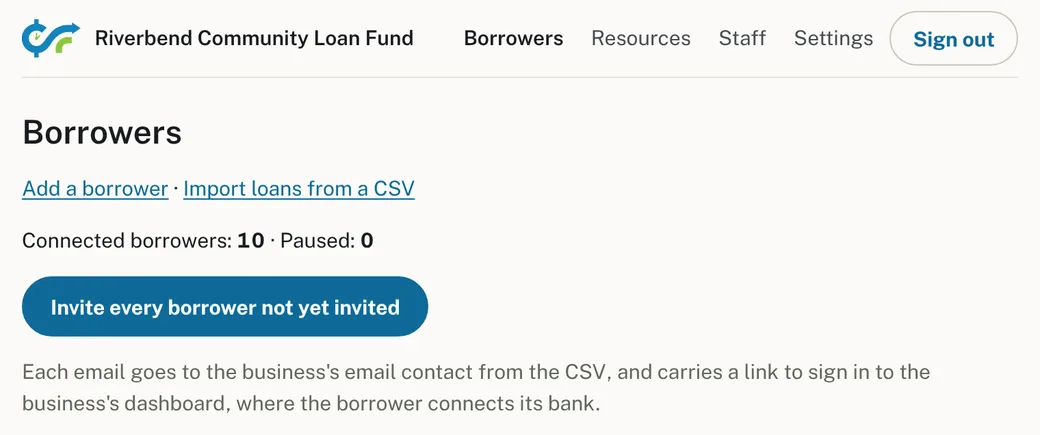
Enter a business owner's details, or import your loans from a CSV, and CircumFi emails each owner an invitation. While the owner's bank account stays connected through Plaid or another banking connector, transaction data updates with each available pull, at least daily.
02 · Monitor
See changes and who would benefit most.
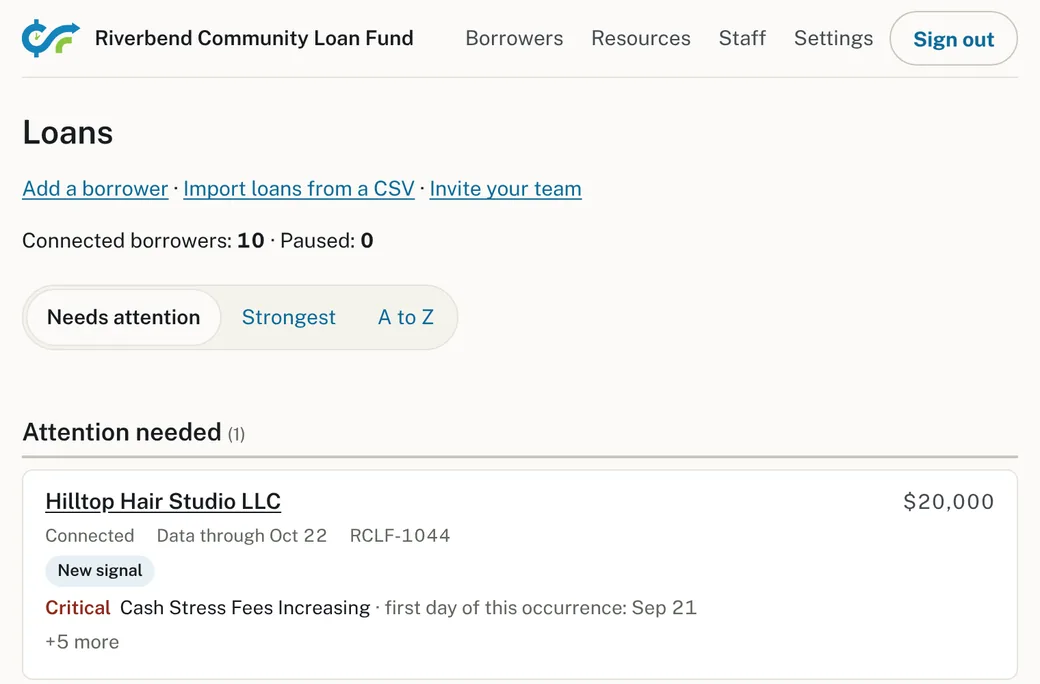
A borrower can still be current while cash activity begins to move in the wrong direction. CircumFi gives you an up-to-date view of your strongest borrowers, and those in need of a hand, so you can inform your risk ratings with continuous data.
03 · Assist
Technical assistance, right on time.
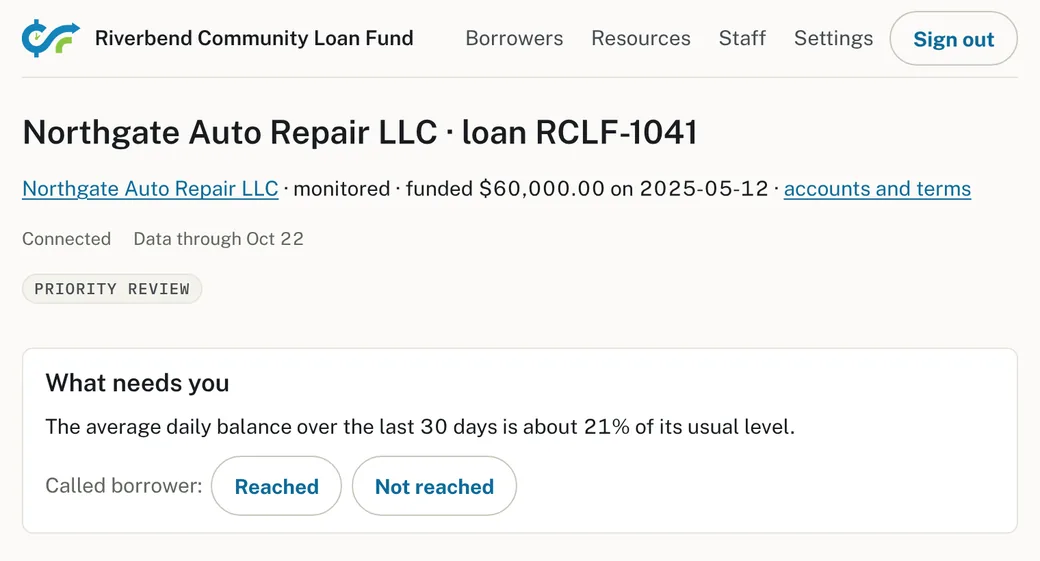
CircumFi routes the case to your team for review. Your policy and your people decide how to help: precise technical assistance from your team, an introduction to the right community partner, a temporary deferment, or a modification, while there's still room for a turnaround. The business owner has a dashboard of their own all along, with cash flow insights, personalized alerts, and notifications.
04 · Repeat
Your next loan is already in your portfolio.
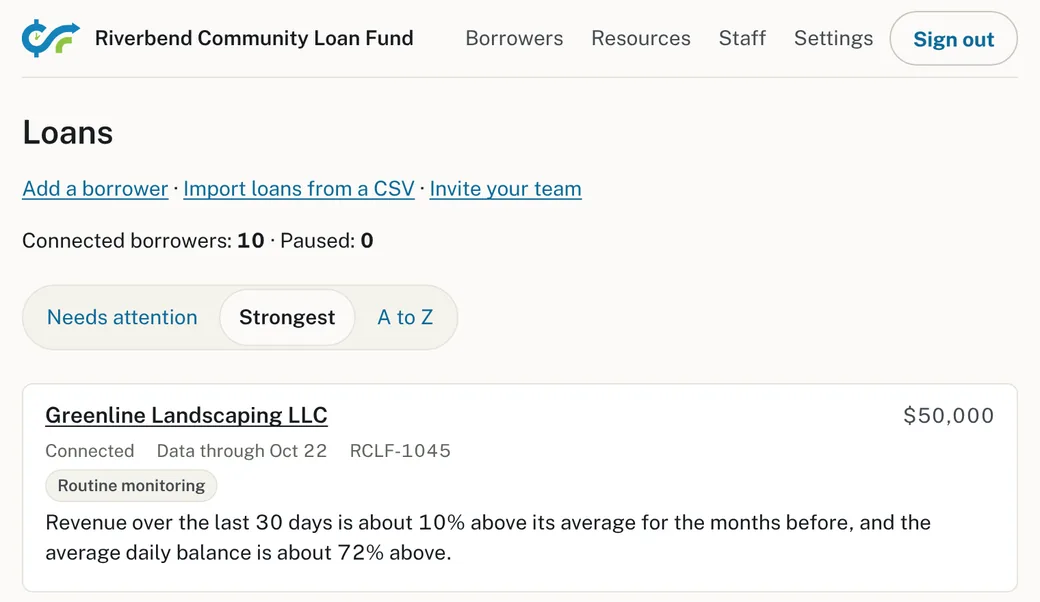
The same monitoring that spots strain also shows you which businesses are growing stronger. Reach out to existing borrowers who are demonstrating sustained revenue growth, controlled operating expenses, improved margins, and rising cash flow.
See the evidence behind every figure.
The portfolio monitoring page opens into the app itself: who needs a hand first, what reaches your team, and one real borrower's account, de-identified.
Stay ahead of missed payments.
If you're ready to discuss post-origination portfolio monitoring, let's start a conversation.
Talk to us